
Category Archive Uncategorized

Bybeatrice

kenmore elite washer smartwash quiet pak 9 manual

Kenmore Elite SmartWash Quiet Pak 9 Washer: A Comprehensive Guide

This guide provides essential information for Kenmore Elite SmartWash Quiet Pak 9 owners, covering troubleshooting, maintenance, and safety details.
Access official manuals and expert advice for optimal performance.

Understanding Your Kenmore Elite Washer

The Kenmore Elite SmartWash Quiet Pak 9 represents a significant advancement in laundry technology, designed for both powerful cleaning and quiet operation. This front-loading, high-efficiency washer incorporates features like the SmartWash system, which intelligently senses soil levels and adjusts wash cycles accordingly.

Understanding your washer’s capabilities begins with familiarizing yourself with its model number – often found on a label inside the door or on the back of the machine (like HE3 110.4789 series). This number is crucial for locating the correct official manual and accessing specific troubleshooting information.

The SmartWash Quiet Pak 9 is engineered to deliver exceptional cleaning performance while minimizing noise disruption. Its HE3 design emphasizes water and energy conservation, making it an environmentally conscious choice. Proper usage, as detailed in the user manual, ensures optimal results and longevity of your appliance.

Model Numbers and Series Identification

Accurate identification of your Kenmore Elite SmartWash Quiet Pak 9 washer’s model number is paramount for accessing the correct documentation and support. The most common series is the HE3 110.4789, but variations exist, including HE3 4785, HE3 4788, and Elite he3 110.4785 series.

Locate the model number on the appliance’s data plate, typically found inside the washer door or on the rear panel. This alphanumeric code is essential when downloading the official use & care manual from resources like ManualsLib. Using the wrong manual can lead to incorrect instructions and potential appliance damage.

Understanding the series helps pinpoint specific features and troubleshooting steps relevant to your machine. Kenmore frequently updates models, so precise identification ensures you have the most accurate information available. Always verify the model number before attempting repairs or seeking assistance.

Locating the Official Manual

Finding the official Kenmore Elite SmartWash Quiet Pak 9 washer manual is crucial for safe and effective operation. A primary resource is ManualsLib, offering downloadable PDF versions of the “Use & Care Manual” for series like HE3 110.4789, HE3 4785, and HE3 4788.

These manuals contain vital information regarding installation, operation, maintenance, and troubleshooting. Searching online using your specific model number (found on the appliance’s data plate) will yield the most accurate results.

Additionally, exploring the Kenmore website or contacting their customer support can provide access to digital copies or guidance on obtaining a physical manual. Utilizing the official documentation ensures you follow recommended procedures and understand your appliance’s features fully, maximizing its lifespan and performance.

Downloading the Kenmore Elite HE3 110.4789 Series Manual

To download the Kenmore Elite HE3 110.4789 Series manual, visit ManualsLib. This online resource provides a readily accessible PDF version of the “Use & Care Manual” specifically for front-loading automatic washers within this series.

The download process is straightforward; simply locate the manual on the website and select the download option. This manual details everything from initial setup and operating instructions to detailed maintenance schedules and troubleshooting guides.

Having a digital copy allows for quick reference and easy access to information whenever needed. Ensure the downloaded file is saved to a convenient location on your device for future use. This manual is an invaluable tool for maximizing the performance and longevity of your Kenmore Elite washer.

Key Features of the SmartWash Quiet Pak 9

The SmartWash technology optimizes water usage, while the Quiet Pak 9 system minimizes noise. These HE3 high-efficiency washers deliver powerful cleaning performance.

SmartWash Technology Explained

SmartWash technology represents a significant advancement in laundry care, intelligently sensing soil levels during the wash cycle. This innovative feature allows the Kenmore Elite SmartWash Quiet Pak 9 washer to adapt wash times and agitation speeds, ensuring a thorough clean while conserving water and energy.

Unlike traditional washers with pre-set cycles, SmartWash dynamically adjusts to the specific needs of each load. Heavily soiled items receive extended wash times and increased agitation, while lightly soiled clothes benefit from shorter, gentler cycles. This personalized approach optimizes cleaning performance and minimizes wear and tear on fabrics.

The system utilizes advanced sensors to analyze water turbidity, effectively gauging the amount of dirt and debris present. Based on this analysis, the washer automatically determines the optimal wash parameters, delivering consistently excellent results with every load. This smart functionality contributes to both superior cleaning and increased efficiency.

Quiet Pak 9 Noise Reduction System

The Quiet Pak 9 system is engineered to minimize operational noise, creating a more peaceful laundry experience. This advanced noise reduction technology incorporates several key features designed to dampen vibrations and sound transmission. A key component is the strategically designed cabinet and internal structure, which absorbs and dissipates sound waves.

Furthermore, the washer utilizes specialized suspension rods and a robust motor mounting system to isolate vibrations from the surrounding environment. These components work in harmony to prevent the transmission of noise through the floor and walls. The internal components are also designed for quieter operation, reducing mechanical sounds during washing and spinning.

The result is a remarkably quiet washing machine, allowing you to run laundry cycles at any time of day or night without disturbing your household. This feature is particularly beneficial for those with open-concept living spaces or shared laundry areas, enhancing overall comfort and convenience.

HE3 High Efficiency Washers

Kenmore Elite HE3 washers, like the SmartWash Quiet Pak 9, represent a significant advancement in laundry technology. “HE” signifies High Efficiency, meaning these machines use substantially less water and energy compared to traditional top-load washers. This translates to lower utility bills and a reduced environmental impact.

The HE3 series achieves superior cleaning performance with a lower water level through a unique wash motion and impeller design. These washers require specialized High Efficiency (HE) detergent, formulated to produce fewer suds. Using regular detergent can create excessive suds, interfering with the wash cycle and potentially damaging the machine.

Furthermore, HE3 washers boast faster spin speeds, extracting more water from clothes, reducing drying time, and saving even more energy. The SmartWash Quiet Pak 9 combines these HE benefits with intelligent features and a quiet operation, offering a powerful and eco-friendly laundry solution.

Troubleshooting Common Issues

This section details solutions for frequent problems with your Kenmore Elite SmartWash Quiet Pak 9, including error codes like F02, excessive suds, and drainage concerns.

Addressing the F02 Error Code (Drainage Issues)

The F02 error code on your Kenmore Elite SmartWash Quiet Pak 9 washer signals a problem with the draining process. Initial troubleshooting involves a thorough inspection of the drain pump and its connecting hose. Carefully check for any obstructions, such as small items or debris, that may be causing a blockage.

Remove any found debris from the pump impeller to ensure it can rotate freely. Next, examine the drain hose itself, looking for kinks or sharp bends that could be restricting water flow. Straighten any bends and ensure the hose isn’t crushed. Don’t forget to inspect and clean the washer’s filter, if accessible, as this often accumulates lint and small objects. If the issue persists after these steps, professional service may be required to diagnose a more complex pump malfunction.

Resolving Excessive Suds Problems

Excessive suds in your Kenmore Elite SmartWash Quiet Pak 9 washer often trigger a suds routine, interrupting the wash cycle. This typically indicates the use of too much detergent, or the wrong type of detergent. High-efficiency (HE) washers, like yours, require specifically formulated HE detergents, which produce fewer suds.

Avoid using regular detergents, as they create an overabundance of foam. Reduce the amount of HE detergent used per load, starting with a smaller quantity than recommended on the packaging. Consider running an empty wash cycle with hot water to help flush out any remaining suds. Regularly cleaning your washer can also help prevent buildup that contributes to sudsing. Always refer to the user manual for recommended detergent amounts and types for optimal performance.

Diagnosing and Fixing Water Drainage Problems

Water drainage issues are frequently signaled by an F02 error code on your Kenmore Elite SmartWash Quiet Pak 9. Begin by inspecting the drain pump and hose for any obstructions like lint, small objects, or kinks. Carefully remove any debris blocking the pump impeller, ensuring it spins freely.

Next, examine the drain hose itself for bends or restrictions that could impede water flow. A straightened hose promotes efficient drainage. If accessible, thoroughly clean the washer’s filter to remove accumulated sediment. Ensure the drain hose is correctly positioned in the drainpipe, not inserted too far, which can cause siphoning. If problems persist, consult the full manual for detailed diagrams and further troubleshooting steps, or consider professional repair.

Maintenance and Care

Regular maintenance ensures optimal performance and longevity of your Kenmore Elite SmartWash Quiet Pak 9. Monthly cleaning and proper detergent use are crucial.

Monthly Washer Maintenance Procedure

To maintain your Kenmore Elite SmartWash Quiet Pak 9 washer’s peak performance, a monthly maintenance routine is highly recommended. This procedure helps prevent odors, mildew buildup, and ensures efficient cleaning. Begin by running an empty hot water cycle with a washing machine cleaner, specifically designed for HE washers.

Following the cleaner cycle, wipe down the rubber door gasket, paying close attention to folds where debris and moisture can accumulate. Inspect the detergent dispenser and remove any residue. Don’t forget to clean the exterior of the washer with a damp cloth.

This proactive approach will keep the inside of your washer fresh and clean, extending its lifespan and preserving its cleaning power. Consistent monthly maintenance is key to avoiding more significant issues down the road.

Cleaning the Washer Filter

Regularly cleaning the washer filter is crucial for preventing drainage problems and maintaining optimal performance of your Kenmore Elite SmartWash Quiet Pak 9. The filter traps lint, hair, and small objects that can obstruct water flow. Locate the filter access panel, typically at the front bottom of the washer.

Before opening, place towels around the area to absorb any spilled water. Carefully open the panel and unscrew the filter cap – be prepared for water to drain out. Remove any debris from the filter, rinsing it thoroughly under running water.

Inspect the filter housing for any obstructions as well. Reinstall the cleaned filter securely, ensuring a watertight seal. A clean filter promotes efficient drainage and prevents error codes like F02, indicating a blockage.

Proper Detergent Usage for HE Washers

Kenmore Elite HE3 washers, including the SmartWash Quiet Pak 9, require High Efficiency (HE) detergent specifically formulated to produce fewer suds. Using regular detergent can create excessive suds, triggering a suds routine and potentially damaging the machine.

Always follow the detergent manufacturer’s recommendations for dosage, but generally, HE washers need significantly less detergent than traditional top-load machines. Overusing detergent doesn’t mean cleaner clothes; it leads to residue buildup and potential issues.

Look for the “HE” symbol on detergent packaging. If excessive suds are detected, the washer will automatically initiate a suds-reducing rinse cycle. To prevent this, carefully measure detergent and avoid using fabric softeners in the dispenser, as they can contribute to suds.

Safety Information and Warranty

Prioritize safety by following all precautions in the manual; Understand your Kenmore Elite SmartWash Quiet Pak 9’s warranty coverage for parts and labor protection.

Important Safety Precautions

To ensure safe operation of your Kenmore Elite SmartWash Quiet Pak 9 washer, always adhere to these crucial precautions. Disconnect the power supply before any maintenance or cleaning. Never attempt to repair the appliance yourself; contact qualified technicians for assistance.
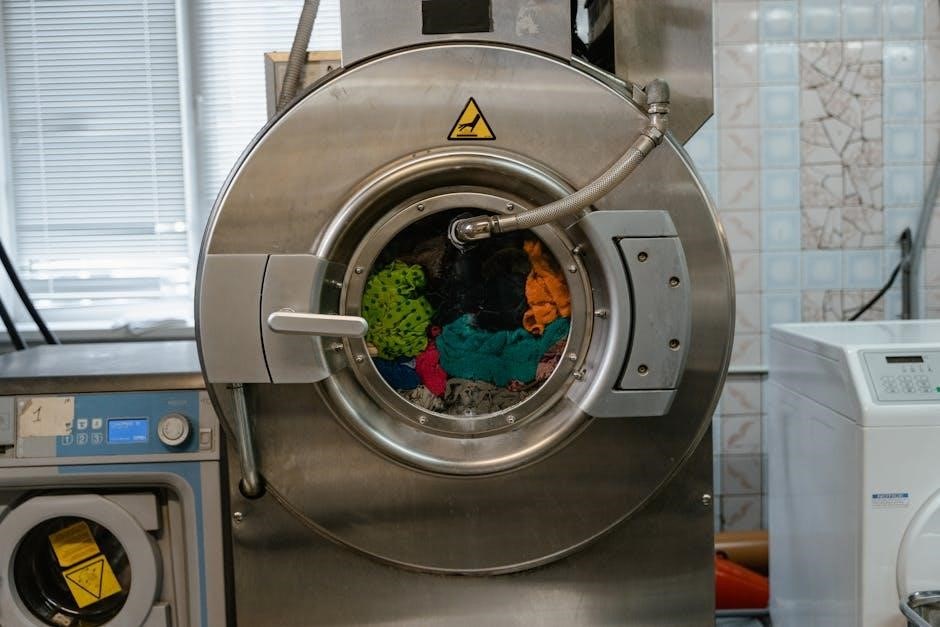
Avoid contact with water during operation to prevent electrical shock. Keep children and pets away from the washer during cycles. Do not wash items contaminated with flammable liquids, as this poses a fire hazard. Always use HE (High Efficiency) detergent specifically designed for this machine to prevent excessive suds.

Inspect the drain hose regularly for damage and ensure proper ventilation. Do not overload the washer, as this can affect performance and potentially damage the machine. Read the complete safety section within the official manual for comprehensive guidelines and warnings.

Understanding Your Warranty Coverage

Your Kenmore Elite SmartWash Quiet Pak 9 washer is protected by a manufacturer’s warranty, offering peace of mind against defects in materials and workmanship. The specific terms and duration of coverage vary depending on the purchase date and model. Typically, the warranty covers parts and labor for a defined period, often one year for full coverage, with extended options available.

Warranty coverage excludes issues resulting from improper installation, misuse, abuse, or failure to follow the provided care instructions. Modifications or repairs performed by unauthorized personnel will also void the warranty. Keep your proof of purchase readily available, as it’s required for all warranty claims.

To initiate a claim, contact Kenmore’s customer support team. Refer to the official manual for detailed warranty information and claim procedures. Extended warranties may be purchased for additional protection beyond the standard coverage period.


Bybeatrice

masterbuilt digital electric smoker manual

Masterbuilt Digital Electric Smoker Manual: A Comprehensive Guide

Welcome! This detailed manual expertly guides you through every aspect of your Masterbuilt digital electric smoker, ensuring delicious results and a seamless smoking experience.

Today is 04/22/2026 10:05:23 ().

We’ll cover setup, operation, maintenance, and troubleshooting, empowering you to master the art of smoking with confidence and precision.

Congratulations on selecting a Masterbuilt Digital Electric Smoker! You’ve embarked on a journey into the rewarding world of flavorful, tender smoked foods. This smoker represents a commitment to quality and convenience, designed to deliver consistently excellent results with minimal effort.

This manual serves as your comprehensive guide, walking you through each step – from initial setup and seasoning to mastering various smoking techniques. We understand that venturing into new culinary territory can be daunting, but rest assured, our smoker is engineered for user-friendliness.

The digital control panel offers precise temperature management, while the integrated features simplify the process, allowing you to focus on perfecting your recipes. Whether you’re a seasoned pitmaster or a beginner, this smoker will elevate your outdoor cooking experience. Prepare to impress your family and friends with mouthwatering brisket, ribs, pork shoulder, and more! Today is 04/22/2026 10:05:23 ().

Unboxing and Initial Inspection

Carefully unpack your Masterbuilt Digital Electric Smoker, ensuring you have ample space to avoid damaging any components. Begin by verifying the contents against the parts list included in the packaging. This list details every item, from the smoker body and racks to the drip pan and control panel.

Inspect each part for any shipping damage – dents, scratches, or broken pieces. If you discover any issues, immediately contact Masterbuilt Customer Support. Do not attempt to assemble a damaged smoker. Retain all packaging materials until you’ve confirmed all parts are present and in good condition.

Familiarize yourself with the overall construction and identify key components. Today is 04/22/2026 10:05:23 (). Proper initial inspection prevents frustration later and ensures a safe and enjoyable smoking experience. A thorough check now safeguards your investment and prepares you for successful smoking sessions.

Safety Precautions & Warnings

Always operate your Masterbuilt Digital Electric Smoker outdoors, away from combustible materials. Never use it inside a garage, carport, or enclosed area. Ensure adequate ventilation to prevent carbon monoxide buildup. Keep children and pets a safe distance from the hot smoker during operation.

Caution: Surfaces become extremely hot during use. Wear heat-resistant gloves when handling hot components. Never touch the heating element or interior surfaces while the smoker is on or immediately after use. Avoid using extension cords; plug directly into a grounded outlet.

Today is 04/22/2026 10:05:23 (). Disconnect the power cord before cleaning or performing maintenance. Do not immerse the control panel or electrical components in water. Follow all instructions carefully to prevent fire, electric shock, and personal injury. Prioritize safety for a positive smoking experience.

Understanding the Smoker Components

Explore the key parts of your Masterbuilt smoker – from the digital control panel to the heating element, racks, and grease management system – for optimal performance.

Today is 04/22/2026 10:05:23 ().

Familiarizing yourself with each component ensures efficient operation and delicious, perfectly smoked food every time.

Control Panel Overview

The digital control panel is the brain of your Masterbuilt smoker, offering precise temperature and time control for consistent results. Power Button: Initiates and terminates smoker operation. Temperature Control: Adjusts the desired cooking temperature, typically ranging from 100°F to 275°F. Time Control: Sets the smoking duration, allowing for unattended operation. Display Screen: Clearly shows the current temperature, set temperature, and remaining cook time.

Today is 04/22/2026 10:05:23 ().

Meat Probe Port: Connects the included meat probe for accurate internal temperature monitoring. Mode Selection: Some models offer pre-set smoking modes for various meats. Alerts: The panel will alert you when the set temperature is reached or the timer expires. Understanding these functions is crucial for mastering your smoker and achieving perfectly smoked food. Refer to the detailed diagrams within this manual for visual guidance on each control’s location and function.

Heating Element & Wood Chip Tray

The heating element, located within the smoker, is responsible for generating the heat necessary for cooking and smoke production. It’s crucial to maintain its cleanliness for optimal performance. The wood chip tray, positioned near the heating element, holds the wood chips that create the signature smoky flavor. Ensure the tray is securely in place before operation.

Today is 04/22/2026 10:05:23 ().

Wood Chip Capacity: The tray’s capacity dictates how frequently you’ll need to replenish the wood chips. Chip Type: Experiment with different wood types (hickory, mesquite, apple) to discover your preferred flavor profiles. Proper Loading: Avoid overfilling the tray, as this can restrict airflow. Regularly inspect and clean both the heating element and wood chip tray to prevent flare-ups and ensure consistent smoking temperatures. A well-maintained system guarantees flavorful and safe results.

Water Pan & Grease Management System

The water pan, a vital component, maintains humidity within the smoker, preventing food from drying out during extended cooking times. Regularly refill it with water, ensuring it doesn’t run dry. The grease management system, typically a removable drip tray, collects rendered fats and drippings. This system is crucial for preventing flare-ups and simplifying cleanup.

Today is 04/22/2026 10:05:23 ().

Pan Placement: Position the water pan directly under the cooking racks to maximize humidity. Grease Tray Monitoring: Check the grease tray frequently, especially during longer smokes, and empty it when nearly full. Cleaning: Thoroughly clean both the water pan and grease tray after each use to prevent buildup and maintain hygiene. Proper management of water and grease contributes to a cleaner, safer, and more flavorful smoking experience.

Racks & Cooking Space

Your Masterbuilt smoker features multiple racks, providing ample cooking space for various cuts of meat and different smoking projects. Rack Adjustability: Many models offer adjustable rack positions, allowing you to accommodate items of varying heights. Weight Capacity: Be mindful of the weight capacity of each rack to prevent sagging or damage. Distribute the weight evenly across the racks.

Today is 04/22/2026 10:05:23 ().

Airflow: Ensure sufficient space between items on the racks to allow for proper airflow, promoting even cooking and smoke penetration. Rack Material: The racks are typically chrome-plated for durability and easy cleaning. Maximizing Space: Utilize vertical space efficiently by stacking smaller items or using multiple racks simultaneously. Proper rack arrangement is key to successful and efficient smoking.

Setting Up Your Smoker

Prepare for deliciousness! This section details the crucial initial steps – burn-in, seasoning, and powering on – to ensure optimal performance and flavor.

Today is 04/22/2026 10:05:23 ().

Follow these instructions carefully for a fantastic smoking journey with your new Masterbuilt digital electric smoker.

Initial Burn-In Procedure

The first step to smoking success is the initial burn-in! This crucial process prepares your Masterbuilt digital electric smoker for optimal performance and helps eliminate any manufacturing residues. Begin by ensuring the smoker is clean and all components are correctly installed, including the water pan and grease tray.

Today is 04/22/2026 10:05:23 ().

Set the smoker to 275°F (135°C) and let it run for approximately 2-3 hours without any food inside. Add a cup of wood chips to the chip tray during this process to initiate the seasoning. This burn-in period allows the internal components to heat up and stabilize, while also burning off any lingering odors from the manufacturing process. Monitor the temperature closely, ensuring it remains consistent throughout the burn-in. After completion, allow the smoker to cool completely before proceeding to the seasoning stage.

Seasoning the Smoker

Seasoning builds flavor and protects your smoker! Following the initial burn-in, seasoning creates a protective layer on the smoker’s interior, enhancing flavor retention and preventing rust. Begin by lightly coating all interior surfaces – including the racks, walls, and drip pan – with a high-smoke-point oil, such as canola or vegetable oil.

Today is 04/22/2026 10:05:23 ().

Set the smoker to 250°F (121°C) and place a small amount of wood chips in the tray. Allow the smoker to run for approximately 2-3 hours. This process polymerizes the oil, creating a non-stick surface. Repeat this process 2-3 times for a robust seasoning. Avoid using strong-flavored oils, as they can impart unwanted tastes to your food. Proper seasoning is key to achieving authentic smoky flavors and extending the life of your Masterbuilt smoker.

Powering On & Digital Controller Basics

Getting started with the digital controls is simple! First, ensure the smoker is plugged into a grounded outlet. Press the power button to initiate the system. The digital display will illuminate, presenting the current temperature and setpoint. Use the “Up” and “Down” arrow buttons to adjust the desired cooking temperature.

Today is 04/22/2026 10:05:23 ().

The “Timer” button allows you to set a cooking duration; the smoker will automatically shut off when the timer reaches zero. The “Smoke” button controls the intensity of smoke generation; Familiarize yourself with these basic functions. Refer to the control panel overview for detailed button descriptions. Remember to always preheat the smoker before adding food for consistent results. Experiment with different temperature settings to discover your preferred smoking profiles.

Smoking Techniques & Recipes

Unlock flavorful possibilities! This section details essential smoking techniques, wood chip pairings, and mouthwatering recipes for brisket, ribs, and pork shoulder.

Today is 04/22/2026 10:05:23 ().

Master temperature control and utilize the meat probe for perfectly smoked results every time, elevating your culinary creations.

Temperature Control & Calibration

Achieving precise temperature is crucial for successful smoking. Your Masterbuilt digital electric smoker offers user-friendly digital controls, allowing you to set your desired cooking temperature with accuracy. However, variations can occur due to external factors like ambient temperature and power fluctuations.

To ensure optimal performance, periodic calibration is recommended. Begin by comparing the smoker’s displayed temperature with a reliable external thermometer placed on the cooking rack. If discrepancies exist, access the calibration settings through the digital controller. Follow the on-screen prompts to adjust the displayed temperature to match the external thermometer’s reading.

Consistent monitoring is key. Utilize the meat probe thermometer to track the internal temperature of your food, guaranteeing it reaches safe and delicious levels. Remember that maintaining a stable temperature throughout the smoking process is vital for achieving consistent results and flavorful, tender meats. Today is 04/22/2026 10:05:23 ().

Wood Chip Selection Guide

Choosing the right wood chips dramatically impacts the flavor profile of your smoked foods. Your Masterbuilt smoker utilizes wood chips to generate authentic smoky aromas. Different wood types impart unique tastes, allowing for culinary experimentation.

Hickory provides a strong, classic smoky flavor, ideal for ribs and pork shoulder. Mesquite delivers an even bolder, intense smoke, perfect for brisket. Apple wood offers a milder, sweeter taste, excellent for poultry and fish. Cherry wood imparts a fruity, delicate flavor, complementing pork and poultry.

Experiment with blends to create custom flavor combinations. Ensure wood chips are dry for optimal smoke production. Soak chips briefly (30 minutes) for a slower burn, but avoid prolonged soaking. Today is 04/22/2026 10:05:23 (). Always follow safety guidelines when handling wood chips and ensure proper ventilation.

Popular Smoking Recipes (Brisket, Ribs, Pork Shoulder)

Mastering the “Big Three” – brisket, ribs, and pork shoulder – unlocks incredible smoking potential with your Masterbuilt. Brisket requires low and slow cooking (225°F / 107°C) for 12-18 hours, utilizing the 3-2-1 method for tenderness. Spare ribs benefit from a similar approach, smoking for 6-8 hours, often with a dry rub and mop sauce.

Pork shoulder (pulled pork) is more forgiving, smoking for 8-12 hours at 225°F. A flavorful rub and consistent temperature are key. Today is 04/22/2026 10:05:23 (). Utilize the meat probe to monitor internal temperatures – 203°F for brisket, 195°F for ribs, and 203°F for pork shoulder. Remember to rest the meat before slicing or pulling for maximum juiciness.

Using the Meat Probe Thermometer

Precision is paramount when smoking, and the Masterbuilt meat probe thermometer is your essential tool. Insert the probe into the thickest part of the meat, avoiding bone. Connect the probe to the digital controller; it will display both the meat’s internal temperature and the setpoint temperature.

Utilize the alarm feature to alert you when your meat reaches the desired temperature – crucial for brisket (203°F), ribs (195°F), and pork shoulder (203°F). Today is 04/22/2026 10:05:23 (). Regularly check the probe’s placement to ensure accurate readings. Proper probe use eliminates guesswork, guaranteeing perfectly cooked, safe, and flavorful results every time.

Maintenance & Cleaning

Regular upkeep ensures longevity and optimal performance of your Masterbuilt smoker. Consistent cleaning of components, like the grease trap, is vitally important.

Today is 04/22/2026 10:05:23 ().

Proper maintenance guarantees delicious, safe smoking experiences for years to come, preserving your investment.

Regular Cleaning Procedures

Consistent cleaning is paramount for maintaining a hygienic and efficient smoking environment with your Masterbuilt digital electric smoker. After each use, allow the smoker to cool completely before beginning the cleaning process. Remove the racks, water pan, and grease tray for individual washing with warm, soapy water.

Today is 04/22/2026 10:05:23 ().

Wipe down the interior of the smoker with a damp cloth to remove any lingering grease or food particles. Avoid abrasive cleaners, as they can damage the smoker’s finish. The exterior can be cleaned with a mild detergent and a soft cloth. Regularly inspect the heating element for buildup and address it as described in the dedicated section. Thorough cleaning prevents flare-ups, ensures accurate temperature control, and extends the life of your smoker, guaranteeing consistently delicious results.

Grease Trap Maintenance

The grease trap is a critical component for easy cleanup and preventing potential fire hazards in your Masterbuilt digital electric smoker. Regularly check the grease trap – ideally after each smoking session, or at least every other use – to prevent overflow and buildup. Carefully remove the trap, ensuring it’s cool to the touch, and dispose of the collected grease responsibly, never down the drain.

Today is 04/22/2026 10:05:23 ().

Clean the trap thoroughly with warm, soapy water after each disposal. Consider lining the trap with aluminum foil for even easier cleanup. A well-maintained grease trap not only simplifies cleaning but also contributes to the overall safety and longevity of your smoker, ensuring a pleasant and worry-free smoking experience every time.

Heating Element Cleaning

Maintaining a clean heating element is vital for optimal performance and longevity of your Masterbuilt digital electric smoker. Before any cleaning, always disconnect the smoker from the power source to prevent electrical shock. Gently remove any loose debris or food particles from around the heating element using a soft brush or cloth.

Today is 04/22/2026 10:05:23 ().

Avoid using abrasive cleaners or scouring pads, as these can damage the element’s coating. For stubborn residue, a slightly damp cloth may be used, ensuring the element is completely dry before reconnecting the smoker. Regular cleaning ensures efficient heat distribution and prevents potential malfunctions, contributing to consistent and delicious smoking results.

Long-Term Storage Instructions

Preparing your Masterbuilt smoker for extended storage requires careful attention to prevent damage and ensure it’s ready for use when you’re ready to smoke again. Begin by thoroughly cleaning the entire unit, including the racks, drip pan, and heating element, as detailed in the maintenance section.

Today is 04/22/2026 10:05:23 ().

Ensure all components are completely dry before storage. Store the smoker in a cool, dry, and covered location, protected from the elements. Consider covering it with a breathable smoker cover to prevent dust accumulation. Disconnect the power cord and store it separately. Proper storage will preserve your smoker’s functionality and extend its lifespan.

Troubleshooting Common Issues

Facing problems? This section provides solutions for typical issues like heating failures, temperature swings, error messages, and smoke generation difficulties, ensuring smooth operation.

Today is 04/22/2026 10:05:23 ().

We’ll guide you through diagnosing and resolving these challenges, getting you back to enjoying perfectly smoked food quickly and efficiently.

Smoker Not Heating

Problem: Your Masterbuilt smoker isn’t reaching the set temperature or isn’t heating at all. This is a common issue with several potential causes. First, verify the power supply – ensure the smoker is securely plugged into a functioning outlet. Test the outlet with another device to confirm it’s providing power.

Next, check the digital controller. Is it displaying any error codes? Refer to the ‘Error Codes & Their Meanings’ section for specific guidance. Ensure the timer isn’t set to ‘off’ or a future start time. Also, inspect the heating element. While the smoker is completely cooled and unplugged, visually examine the element for any breaks or damage. A damaged element requires replacement.

Consider the ambient temperature; extremely cold weather can impact heating performance. Finally, confirm proper airflow – obstructions can hinder heat distribution. Today is 04/22/2026 10:05:23 (). If these steps don’t resolve the issue, contact Masterbuilt customer support for further assistance.

Temperature Fluctuations

Issue: Experiencing inconsistent temperatures during a smoke? Minor fluctuations are normal, but significant swings can impact your results. First, check the door seal. A poor seal allows heat to escape, causing temperature drops. Ensure the door closes tightly and the gasket is intact. Ambient temperature plays a role; cold weather or wind can affect stability.

Ensure adequate airflow – restricted airflow can lead to overheating, followed by a temperature drop when the smoker attempts to compensate. Avoid opening the smoker door frequently, as each opening releases heat. Today is 04/22/2026 10:05:23 ().

Verify the placement of the smoker; direct sunlight or proximity to heat sources can cause fluctuations. Calibrate the temperature probe (see ‘Temperature Control & Calibration’) for accurate readings. If fluctuations persist, contact Masterbuilt support for assistance, providing details about the observed swings.

Error Codes & Their Meanings

Error codes on your Masterbuilt digital controller indicate specific issues. Err1 typically signals a temperature sensor malfunction – contact support for replacement. Err2 often indicates a heating element failure, requiring professional repair. Err3 suggests a communication error between the controller and the sensor; try resetting the unit.

Err4 can mean an open or shorted temperature probe; check the probe connection and integrity. Today is 04/22/2026 10:05:23 (). Err5 usually points to a low-temperature issue, potentially due to ambient temperature or a faulty heating element.

Always consult the full error code list in the manual or on the Masterbuilt website. Before contacting support, attempt a power cycle (unplug for 10 minutes). Document the error code and the circumstances when it appeared to expedite the troubleshooting process. Ignoring error codes can lead to further damage.

Smoke Generation Problems

Insufficient smoke often stems from inadequate wood chips in the tray. Ensure the tray is filled, but not overfilled, to allow for proper airflow. Wet wood chips won’t smolder effectively; use dry, seasoned wood. Today is 04/22/2026 10:05:23 (). A clogged wood chip tray can also restrict smoke – clean it regularly.

Excessive smoke might indicate too many wood chips or a blocked vent. Reduce the chip quantity and check vent openings. No smoke at all could mean a faulty heating element not igniting the chips, or a disconnected power supply;

Proper smoker seasoning builds up a smoke-flavor base. Experiment with different wood types for varied flavors. Regularly inspect the heating element for buildup that could hinder ignition. Remember, consistent smoke is key to authentic flavor!

Warranty Information & Support

Masterbuilt proudly stands behind its products with a comprehensive warranty, protecting against manufacturing defects. For support, visit our website or contact our dedicated customer service team.

Masterbuilt Warranty Details

Your Masterbuilt smoker is covered by a limited warranty, protecting against defects in materials and workmanship for a specified period. The length of coverage varies depending on the specific model and component. Generally, the main smoker body benefits from a longer warranty duration, typically one to two years, while components like the heating element and digital controller may have a shorter coverage period, often around 90 days to one year.

This warranty does not cover normal wear and tear, misuse, accidental damage, or modifications. It’s crucial to retain your original purchase receipt as proof of date and location of purchase for any warranty claims. To initiate a claim, contact Masterbuilt customer support with your model number, serial number, and a detailed description of the issue;

Masterbuilt reserves the right to repair or replace defective parts or the entire unit at their discretion. Warranty service is only valid if the smoker has been used in accordance with the instructions outlined in this manual. Please review the full warranty documentation available on the Masterbuilt website for complete terms and conditions.

Contacting Customer Support

Need assistance with your Masterbuilt smoker? Our dedicated customer support team is here to help! We offer multiple channels to ensure you receive prompt and effective support. You can reach us via phone during business hours – typically Monday through Friday – at the number listed on our website, www.masterbuilt.com.

For detailed FAQs, troubleshooting guides, and helpful videos, explore the comprehensive support section of our website. You can also submit a support ticket online, providing a detailed description of your issue and any relevant information, such as your model and serial number.

Our team strives to respond to all inquiries within 24-48 hours. When contacting support, please have your proof of purchase readily available. We are committed to ensuring your complete satisfaction with your Masterbuilt smoking experience!

Bybeatrice

monster pdf walter dean myers

“Monster” is a gripping young adult novel by Walter Dean Myers, exploring themes of guilt, identity, and justice through its intense courtroom drama.

1.1 Overview of the Novel

Monster by Walter Dean Myers is a compelling young adult novel that delves into the life of Steve Harmon, a teenager on trial for murder. The story unfolds through a non-linear narrative, blending Steve’s courtroom experiences with flashbacks of his past. Myers explores themes of guilt, identity, and the criminal justice system, raising questions about Steve’s innocence. The novel’s unique format, written partly in screenplay style, adds depth to Steve’s internal struggles. Set against the backdrop of urban life, Monster challenges readers to consider societal influences on youth and the fairness of the legal system. Its gripping plot and moral complexity make it a powerful exploration of adolescence and justice.

1.2 Author Background

Walter Dean Myers, a bestselling and award-winning author, was born on August 12, 1937, in Martinsburg, West Virginia. He grew up in Harlem, New York, where he faced challenges that later influenced his writing. Myers dropped out of high school but developed a passion for literature, eventually becoming a prominent voice in young adult fiction. His works often explored themes of race, identity, and social justice, resonating with diverse audiences. Known for his raw, realistic storytelling, Myers received numerous accolades, including the Margaret A. Edwards Award for his significant contribution to literature for teens. His experiences and perspectives deeply shaped his writing, making him a beloved and respected author.

1.3 Historical Context

Set in the late 20th century, Monster reflects the societal challenges of its time, particularly in urban America. The novel addresses systemic issues such as racial bias, poverty, and the criminal justice system’s treatment of minorities. Harlem, where much of the story unfolds, serves as a backdrop for exploring these themes. The historical context underscores the struggles faced by young African Americans, highlighting how societal structures often perpetuate cycles of violence and inequality. Myers’ portrayal of these realities resonates with the broader conversations about justice and race in America during the late 1990s and early 2000s.

Plot Summary of “Monster”

The story follows Steve Harmon, a teenager on trial for murder, as he navigates a complex legal battle while reflecting on his past actions and identity.

2.1 The Storyline

The story follows Steve Harmon, a teenager on trial for murder, as he navigates the complexities of the criminal justice system. Presented in a screenplay format, the novel alternates between Steve’s courtroom experiences and his reflections on the events leading to the trial. Steve’s journey explores themes of identity, guilt, and innocence, while the non-linear narrative builds tension and emotional depth. The unique format allows readers to witness Steve’s internal struggles and the harsh realities of the justice system firsthand, creating a gripping and thought-provoking tale.

2.2 Key Events and Turning Points

The trial of Steve Harmon unfolds with intense courtroom drama, revealing pivotal moments that shape the narrative. The prosecution portrays Steve as the mastermind of the robbery, while the defense argues his innocence. A turning point occurs when King, the alleged leader, testifies against Steve, heightening tension. Steve’s internal struggle to prove his humanity and the judge’s final verdict serve as climactic moments, leaving a lasting impact on Steve’s life and perception of justice.

2.3 Climax and Resolution

The climax of Monster unfolds in the courtroom as Steve Harmon’s fate hangs in the balance. The prosecution argues Steve was complicit in the robbery and murder, while the defense contends he was merely a bystander. Tensions rise as the jury delivers a verdict of not guilty, acquitting Steve of the charges. The resolution sees Steve grappling with the emotional aftermath, questioning his identity and the justice system’s fairness. Though freed, Steve is forever changed, reflecting on the harsh realities of race, guilt, and societal expectations. The novel concludes with Steve seeking redemption and self-understanding in a world that often judges him prematurely.

Main Characters in “Monster”

Steve Harmon: The protagonist, a teenager on trial for murder, grappling with guilt and identity. King: The alleged mastermind of the crime. Mr. O’Brien: Steve’s defense attorney. Sandra Petrocelli: The prosecutor seeking justice.

3.1 Steve Harmon

Steve Harmon is the 16-year-old protagonist of Monster, on trial for felony murder. The story unfolds through his journal entries, revealing his fear, confusion, and struggle to prove his innocence. Steve’s narrative voice is raw and introspective, as he grapples with his identity and the harsh realities of the criminal justice system. His journal entries often blur the line between reality and his imagination, showcasing his desire to escape the chaos. Steve’s character embodies the central themes of guilt, innocence, and self-perception, making him a deeply relatable and complex figure in the novel.

3.2 King

King is a pivotal figure in Steve Harmon’s life, playing a central role in the events leading to the murder trial. His charismatic yet dangerous influence draws Steve into a world of crime, blurring the lines between loyalty and manipulation. King’s actions are calculating and ruthless, making him a key suspect in the robbery-turned-murder. Steve’s relationship with King is complex, as he struggles to reconcile his fear of King with his need for acceptance. King’s death becomes a turning point, forcing Steve to confront the consequences of their actions and question his own guilt or innocence. King’s character underscores the themes of peer pressure and moral ambiguity in the novel.

3.3 Mr. O’Brien

Mr. O’Brien is Steve Harmon’s defense attorney, whose calm demeanor contrasts with the chaos of the trial. He believes in Steve’s innocence and works tirelessly to prove it, challenging the prosecution’s evidence. His strategic questioning and composed arguments highlight his professionalism. Steve views Mr. O’Brien as a father figure, seeking validation and trust. Despite the odds, Mr. O’Brien remains optimistic, emphasizing Steve’s youth and potential for redemption. His character underscores the importance of advocacy and belief in the justice system, making him a pivotal figure in Steve’s journey.

3.4 Sandra Petrocelli

Sandra Petrocelli is Steve Harmon’s girlfriend, who plays a pivotal role in his life. She remains loyal and supportive throughout his trial, believing in his innocence. Sandra’s unwavering faith in Steve serves as a moral anchor, contrasting the harsh realities of the courtroom. Her presence highlights Steve’s desire for normalcy and connection, showcasing his vulnerability. Sandra’s character underscores the theme of identity, as Steve struggles to reconcile his perceived image with his true self. Her belief in him offers a glimmer of hope amid the chaos, making her a significant figure in Steve’s emotional journey and the story’s exploration of guilt and innocence.

Themes in “Monster”

“Monster” by Walter Dean Myers explores themes of guilt, innocence, and identity, delving into the criminal justice system and race, reflecting societal issues and personal struggles.

4.1 Guilt and Innocence

The novel delves deeply into the themes of guilt and innocence, particularly through Steve Harmon’s trial. Steve’s internal struggle with his role in the crime blurs the lines between guilt and innocence, raising questions about moral responsibility. The courtroom setting amplifies this tension, as the prosecution portrays Steve as a calculating individual, while the defense argues for his innocence. Myers explores how societal perceptions and personal identity influence judgments of guilt. Steve’s reflections reveal his fear of being labeled a “monster,” highlighting the psychological impact of such accusations. The theme challenges readers to consider the complexity of truth and justice in a flawed legal system.

4.2 Identity and Self-Perception

Steve Harmon’s journey in Monster revolves around his struggle to define himself amidst societal labels and personal doubts. His identity is shaped by the trial, where he is perceived as a “monster,” forcing him to confront his own morality. Through his screenplay format, Steve reflects on his actions, questioning whether he is truly guilty or innocent. The novel explores how external judgments and internal fears influence self-perception, highlighting the tension between how others see him and how he sees himself. This duality underscores the complexity of adolescent identity, particularly for marginalized youth navigating systemic biases and personal accountability.

4.3 The Criminal Justice System

In Monster, Walter Dean Myers critiques the criminal justice system, highlighting its flaws and biases. Steve Harmon’s trial exposes the system’s complexity, where race, socioeconomic status, and perception influence outcomes. Myers portrays the courtroom as a high-stakes arena, where the defendant’s guilt or innocence is often overshadowed by procedural technicalities. The novel questions the fairness of treating juveniles as adults and the lack of support for at-risk youth. Through Steve’s experience, Myers underscores the systemic failures that perpetuate cycles of crime and incarceration, urging readers to reflect on the humanity behind criminal cases.

4.4 Race and Society

In Monster, Walter Dean Myers delves into the intersection of race and societal expectations, particularly within the criminal justice system. The novel highlights how systemic racism impacts Steve Harmon’s experiences, as a young Black man navigating a predominantly white legal system. Myers portrays the societal biases that label individuals like Steve as “monsters” based on their race and circumstances. The setting in Harlem and the characters’ interactions underscore the struggles faced by marginalized communities. Through Steve’s journey, Myers critiques the racial disparities in society and the criminal justice system, emphasizing how these factors shape perceptions of guilt and identity. The novel serves as a powerful commentary on race and societal inequality.

Symbolism in “Monster”

The mirror symbolizes self-reflection, the courtroom represents judgment, and the screenplay format reflects Steve’s internal struggle to script his life and identity amidst chaos.

5.1 The Mirror

The mirror in Monster serves as a powerful symbol, reflecting Steve Harmon’s internal struggle with identity and self-perception. It represents his dual existence, as he grapples with how others see him versus who he truly believes he is. The mirror becomes a tool for self-reflection, allowing Steve to confront his fears, insecurities, and the harsh realities of his situation. Through this symbol, Myers highlights the tension between appearance and reality, emphasizing Steve’s journey to understand himself amidst the chaos of his trial and personal turmoil. The mirror ultimately symbolizes the fragmented nature of Steve’s identity, echoing the broader themes of the novel.

5.2 The Courtroom

The courtroom in Monster serves as a central symbol of judgment, justice, and societal scrutiny. It is where Steve Harmon’s fate is decided, reflecting the harsh realities of the criminal justice system. The courtroom’s formal structure contrasts with Steve’s internal chaos, emphasizing the tension between his perceived identity and societal expectations. Through this setting, Myers critiques the fairness of the legal system, particularly for young Black males. The courtroom becomes a stage where guilt, innocence, and race intersect, highlighting the broader societal issues Steve faces. Its presence underscores the novel’s exploration of justice, identity, and the impact of systemic biases.

5.3 The Screenplay Format

The screenplay format in Monster is a unique narrative choice that mirrors Steve Harmon’s internal scriptwriting. Myers uses this structure to blur the lines between reality and fiction, reflecting Steve’s struggle to process his circumstances. The format allows readers to witness the trial and Steve’s thoughts simultaneously, creating a dynamic, layered storytelling experience. This unconventional approach enhances the novel’s tension and emotional depth, making it feel both personal and cinematic. The screenplay format also underscores Steve’s desire to control his narrative, even as his life spirals out of control. This stylistic choice is central to the book’s impact and innovative appeal.

Writing Style and Structure

Myers employs a unique screenplay format and first-person narrative, blending cinematic dialogue with introspective reflections, creating a dynamic and immersive storytelling experience.

6.1 Use of First-Person Narrative

Walter Dean Myers employs a first-person narrative in Monster, allowing readers to experience the story through Steve Harmon’s intimate and raw perspective. This narrative choice creates a sense of immediacy, drawing readers into Steve’s emotional turmoil and legal struggles. The screenplay format further enhances this personal connection, as Steve’s voice feels both authentic and urgent. By limiting the narrative to Steve’s viewpoint, Myers emphasizes his internal conflicts, such as guilt, fear, and self-doubt, while also highlighting his desire to prove his innocence. This storytelling technique not only deepens the emotional impact but also challenges readers to question their assumptions about identity and justice.

6.2 Non-Linear Narrative

The novel employs a non-linear narrative, blending past and present through Steve’s memories and courtroom scenes. This structure mirrors Steve’s fragmented thoughts, reflecting his emotional turmoil. By jumping between timelines, Myers builds suspense and deepens the psychological complexity of Steve’s character. The non-linear format also underscores the themes of guilt and identity, as Steve’s past actions are slowly revealed. This narrative choice keeps readers engaged, forcing them to piece together the story alongside Steve. The interplay between flashbacks and the present-day trial heightens tension, making the story both gripping and thought-provoking. This unique structure is central to the novel’s emotional and thematic impact.

6.3 Screenplay Format

The novel is uniquely written in a screenplay format, blending Steve’s journal entries with courtroom transcripts. This structure mirrors Steve’s perception of his life as a movie, emphasizing his detachment and struggle to differentiate reality from fiction. The format allows readers to witness the trial’s intensity while gaining insight into Steve’s internal conflicts. Myers’ use of this style creates a dynamic, fast-paced narrative that engages readers and underscores the theatrical nature of the legal system. The screenplay format also reflects Steve’s aspiration to become a filmmaker, adding depth to his character and highlighting his desire to control his own story.

Reception and Impact

“Monster” received critical acclaim for its raw portrayal of justice and identity, earning awards like the Michael L. Printz Award and influencing young adult literature profoundly.

7.1 Critical Reception

“Monster” received widespread critical acclaim for its raw, unflinching portrayal of a teenager’s journey through the criminal justice system. Critics praised Myers’ bold narrative style, blending screenplay formats with poetic prose, which added depth and immediacy to Steve Harmon’s story. The novel was hailed for its thought-provoking exploration of guilt, identity, and societal expectations. Many reviewers noted its ability to spark empathy and challenge stereotypes, making it a powerful read for young adults. The book’s unique structure and emotional resonance earned it a spot on several “best of” lists and solidified Myers’ reputation as a master of contemporary young adult literature.

7.2 Awards and Recognition

“Monster” by Walter Dean Myers has received widespread acclaim and numerous awards. It was a finalist for the National Book Award in 1999, showcasing its literary excellence. The novel also won the Michael L. Printz Award in 2000, recognizing its significant contribution to young adult literature. Additionally, it received the Coretta Scott King Award, highlighting its profound portrayal of African American experiences. These accolades underscore Myers’ mastery in crafting compelling stories that resonate deeply with readers, solidifying “Monster” as a landmark in contemporary young adult fiction.

7.3 Popular and Cultural Impact

Monster has left a lasting impact on young adult literature, resonating with readers for its raw portrayal of urban life and justice. Its relatable themes have sparked discussions in schools and communities, making it a staple in many curriculums. The novel’s success has also inspired adaptations and discussions about race, identity, and the criminal justice system. Its influence extends beyond literature, addressing societal issues that continue to affect youth today. Monster remains a powerful voice for marginalized voices, ensuring its relevance in modern conversations about inequality and justice.

Adaptations and Related Works

“Monster” has been adapted into a film and stage play, further amplifying its impact. Walter Dean Myers also wrote notable works like Fallen Angels and Lockdown.

8.1 Film Adaptations

Despite its popularity, Monster by Walter Dean Myers has not yet been adapted into a feature film. However, there have been discussions and considerations about bringing the story to the big screen. The novel’s unique format, blending a screenplay structure with a personal narrative, presents both opportunities and challenges for filmmakers. Its intense courtroom drama and deep exploration of themes like guilt and identity make it a compelling candidate for adaptation. Fans and critics alike hope to see Steve Harmon’s story brought to life in a way that honors the book’s emotional depth and complexity. The adaptation remains a highly anticipated project.

8.2 Stage Adaptations

The stage adaptation of Monster brings the intense courtroom drama to life, capturing the emotional depth of Steve Harmon’s journey. The play retains the novel’s core themes, exploring guilt, identity, and justice through powerful dialogue and staging. Adaptations have been praised for their ability to engage audiences, particularly young people, fostering discussions about the criminal justice system and societal biases. The play’s format mirrors the screenplay style of the novel, enhancing the dramatic tension and Steve’s internal struggles. Performances have been well-received, with many productions incorporating innovative techniques to reflect Steve’s fragmented perspective and the harsh realities of his situation.

8.4 Related Books by Walter Dean Myers

Walter Dean Myers authored numerous impactful books, many exploring similar themes of identity, justice, and societal challenges. Titles like Lockdown and Dope Sick delve into the criminal justice system and personal redemption, resonating with fans of Monster. His works often highlight the struggles of marginalized youth, offering raw, unflinching narratives. Myers’ ability to craft relatable characters and gripping storylines has solidified his legacy as a pivotal voice in young adult literature. These books not only complement Monster but also expand on its themes, providing deeper insights into the experiences of adolescents navigating harsh realities.

Conclusion

“Monster” by Walter Dean Myers remains a powerful exploration of justice, identity, and societal issues, leaving a lasting impact on young adult literature and readers worldwide.

9.1 Summary of Key Points

“Monster” by Walter Dean Myers is a powerful exploration of guilt, identity, and justice, centered around Steve Harmon’s wrongful murder charge. The novel’s unique narrative, blending a screenplay format with Steve’s first-person diary, offers a gripping courtroom drama. Through Steve’s journey, Myers delves into themes of race, societal expectations, and the criminal justice system. The book’s critical acclaim and awards highlight its impact on young adult literature. Its lasting legacy lies in its ability to provoke thought on morality, self-perception, and systemic inequalities, making it a timeless and thought-provoking read for audiences of all ages.

9.2 Lasting Legacy of “Monster”

Walter Dean Myers’ Monster has left an indelible mark on young adult literature, earning critical acclaim and numerous awards. Its unflinching portrayal of systemic injustice resonates deeply, sparking essential conversations about race, guilt, and identity. The novel’s innovative screenplay format has influenced many writers, blending literary and dramatic styles. Adapted into a film, Monster continues to captivate audiences, solidifying its place in contemporary culture. Its exploration of moral ambiguity and the criminal justice system remains relevant, making it a cornerstone of educational curriculums. Myers’ work not only reflects societal challenges but also inspires hope, ensuring Monster remains a timeless and thought-provoking classic.

Bybeatrice

canadian human resource management 13th edition pdf free

Canadian Human Resource Management, 13th Edition, offers a comprehensive guide to HR practices in Canada, focusing on strategic approaches, legal compliance, and fostering workplace diversity.

Overview of the 13th Edition

The 13th edition of Canadian Human Resource Management offers updated insights into modern HR practices, with a focus on technology, globalization, and workplace dynamics. It includes new chapters, case studies, and practical tools to enhance understanding. The edition also features MyLab Management, providing interactive resources for learners. This comprehensive update ensures relevance to current HR challenges and opportunities.

Importance of HRM in Canada

Human Resource Management (HRM) in Canada is crucial for navigating the dynamic business environment, ensuring legal compliance, and fostering workplace diversity. It plays a key role in aligning organizational goals with employee development, enhancing productivity, and maintaining ethical practices. Effective HRM strategies are essential for addressing labor market challenges, promoting inclusivity, and supporting organizational success in a competitive global economy.

Key Features of the 13th Edition

The 13th edition offers a comprehensive guide to Canadian HRM, featuring updated content, strategic insights, and practical tools to navigate modern workplace challenges effectively.

Strategic Approach to HRM

The 13th edition emphasizes aligning HR strategies with organizational objectives, leveraging case studies and practical examples to demonstrate effective HR practices. It explores fostering a positive work environment, addressing global HR challenges, and integrating technology for enhanced efficiency. This approach ensures HR professionals can adapt to evolving business needs while maintaining compliance with legal and ethical standards.

New Topics and Updates

The 13th edition introduces new chapters on diversity, equity, and inclusion, as well as the integration of AI and analytics in HR. It also updates content on employment laws, occupational health, and safety. These additions reflect current HR trends, offering practical insights for professionals and students to navigate modern workplace challenges effectively.

Author and Contributions

Hermann Schwind, a leading authority in HRM, brings extensive expertise to the 13th edition, ensuring it remains a pivotal resource for HR education and professional development.

Hermann Schwind’s Expertise

Hermann Schwind is a renowned expert in Canadian Human Resource Management, known for his comprehensive insights and practical approaches. His expertise spans strategic HR, employment law, and workplace diversity. As the author of the 13th edition, he integrates real-world examples and updated regulations, ensuring the text remains a cornerstone for both students and practitioners in the field of HRM.

Impact of the Book on HR Education

The 13th edition has significantly influenced HR education in Canada by providing a structured, interactive approach to learning. Features like flashcards, MyLab Management, and case incidents enhance student engagement. Widely adopted in Canadian universities, it equips future HR professionals with practical knowledge and skills, making it a cornerstone for academic and professional development in the field of human resource management.

Strategic HR Management

Strategic HR Management aligns HR practices with business goals, enhancing organizational performance through effective planning, employee engagement, and integration of modern HR practices and technologies.

Aligning HR with Business Goals

Aligning HR strategies with business objectives ensures organizational success by fostering a unified direction. The 13th edition emphasizes integrating HR practices with corporate goals, enhancing productivity and employee engagement. It explores how strategic HR planning, recruitment, and performance management contribute to achieving business outcomes, ensuring HR is a key driver of organizational success and long-term growth in Canada’s dynamic business environment.

Role of HR in Organizational Success

HR plays a pivotal role in driving organizational success by aligning strategies with business goals, fostering a positive work culture, and ensuring legal compliance. Effective HR practices enhance talent acquisition, employee engagement, and performance management, while addressing diversity and inclusion. By managing these critical areas, HR contributes to building a skilled, motivated workforce and maintaining organizational stability, ultimately driving long-term success and competitiveness in Canada’s evolving business landscape.

Legal Aspects of HRM in Canada

Canadian HRM involves navigating employment laws, ensuring compliance, and mitigating risks. Key areas include workplace safety, labor standards, and human rights legislation to maintain legal adherence.

Employment Laws and Regulations

Canadian employment laws regulate workplace standards, ensuring fair treatment and safety. Key legislation includes the Canada Labour Code, provincial labor codes, and human rights acts, governing wages, hours, and harassment.

Compliance with these laws is crucial for employers to avoid legal repercussions and maintain a just work environment, aligning with national and provincial regulations.

Compliance and Risk Management

Compliance with employment laws is critical to mitigate risks and ensure ethical practices. Employers must conduct regular audits to identify and address potential violations, fostering a culture of adherence to legal standards.

Effective risk management involves training employees on legal requirements and implementing policies that align with regulatory frameworks, safeguarding both the organization and its workforce from legal repercussions.

Recruitment and Selection

Effective recruitment and selection strategies are essential for attracting top talent, ensuring diversity, and aligning with organizational goals, while complying with Canadian employment laws and standards.

Best Practices in Hiring

Best practices in hiring involve creating clear job descriptions, using structured interviews, and ensuring fairness and diversity in the selection process. Employers should focus on competency-based questions, verify credentials, and promote inclusivity to attract a diverse talent pool. Streamlining the hiring process and providing timely feedback to candidates are also crucial for maintaining a positive employer brand and ensuring legal compliance with Canadian employment standards.

Diversity and Inclusion in Recruitment

Diversity and inclusion in recruitment focus on attracting a wide range of candidates by eliminating biases in job descriptions and selection processes. Employers should implement inclusive sourcing strategies, such as partnering with diverse organizations, to ensure equitable opportunities. Promoting a culture of inclusion helps create a workforce that reflects Canada’s multicultural identity and enhances organizational performance through varied perspectives and innovation.

Employee Training and Development

Employee training and development foster a skilled workforce through continuous learning opportunities, enhancing performance and innovation while aligning with organizational goals and employee career growth.

Importance of Continuous Learning

Continuous learning is essential for fostering a competitive and adaptable workforce in today’s dynamic business environment. It enables employees to stay informed about industry trends, technological advancements, and evolving skills, ensuring they remain relevant and effective. By aligning learning with organizational goals, continuous learning drives innovation, productivity, and employee engagement, ultimately contributing to long-term organizational success and sustainability.

Modern Training Methods

Modern training methods integrate technology and interactive approaches to enhance learning effectiveness. E-learning platforms, microlearning modules, and gamification are increasingly popular, offering flexible and engaging experiences. Virtual reality (VR) and artificial intelligence (AI) simulations also provide immersive training environments. These methods cater to diverse learning styles, promote active participation, and enable employees to acquire skills efficiently, ensuring continuous development and adaptability in a rapidly changing workplace.

Compensation and Benefits

Compensation and benefits strategies are crucial for attracting and retaining talent, ensuring legal compliance, and aligning with organizational goals, fostering productivity and employee satisfaction.

Strategic Compensation Planning

Strategic compensation planning ensures fair, competitive, and aligned pay structures, attracting talent, retaining employees, and driving performance. It balances market rates, internal equity, and legal compliance, fostering a motivated workforce while meeting business objectives effectively.

Designing Effective Benefits Programs

Effective benefits programs align with business goals, attract talent, and enhance employee well-being. They balance competitiveness, legal compliance, and employee needs, offering flexible options like health plans, retirement savings, and wellness initiatives. These programs foster loyalty, productivity, and job satisfaction, ensuring organizations meet diverse workforce expectations while maintaining cost efficiency and supporting long-term employee engagement.

Occupational Health and Safety

Occupational Health and Safety ensures workplace well-being through legislation and hazard prevention. Employers and employees share responsibility in compliance, fostering a safety-first culture to reduce risks and protect workers.

Creating a Safe Work Environment

Creating a safe work environment involves implementing robust safety protocols, adhering to legislative requirements, and fostering a culture of accountability; Employers must conduct hazard assessments, provide training, and ensure proper equipment maintenance. Employees are encouraged to report risks and follow safety procedures. Regular audits and continuous improvement practices further enhance workplace safety, protecting both physical and mental well-being of all staff members effectively.

Legislative Requirements

Legislative requirements in Canadian HRM ensure compliance with federal and provincial laws governing workplace safety, employment standards, and labor relations. The Occupational Health and Safety Act and Canada Labour Code mandate employers to provide safe working conditions, report incidents, and involve employees in safety practices. Non-compliance can result in legal penalties, emphasizing the need for HR professionals to stay informed and ensure adherence to all relevant regulations.

Technology in HRM

Technology transforms HRM through AI, analytics, and HR software, enhancing recruitment, performance tracking, and decision-making. These tools streamline processes, improve efficiency, and support data-driven strategies.

Impact of AI and Analytics

AI and analytics revolutionize HRM by enhancing recruitment, performance tracking, and decision-making. Predictive analytics optimizes hiring, while AI tools automate tasks, improving efficiency. Data-driven insights enable better employee engagement and strategic planning, fostering a competitive edge in Canadian organizations.

HR Software and Tools

HR software and tools streamline processes like recruitment, payroll, and performance management. Platforms such as HRIS and ATS enhance efficiency, enabling better data management and decision-making. These tools support compliance, improve employee engagement, and foster strategic HR practices, making them essential for modern Canadian organizations to thrive in a competitive environment.

Diversity and Inclusion

Diversity and inclusion are critical in fostering an equitable workplace culture, promoting employee well-being, and driving organizational success in Canadian HRM.

Building an Inclusive Workplace

Building an inclusive workplace involves fostering a culture of respect, equity, and belonging. Strategies include unconscious bias training, diverse hiring practices, and creating opportunities for employee voice. Organizations must address systemic barriers and promote inclusivity in policies and practices. This approach enhances employee engagement, innovation, and retention, aligning with Canada’s diverse and multicultural workforce. Inclusive workplaces drive organizational success and societal progress.

Addressing Unconscious Bias

Unconscious bias refers to automatic, unintentional stereotypes that affect decisions. In HRM, addressing it is crucial for fair hiring and promotion. Strategies include bias training, diverse interview panels, and structured evaluation criteria. Recognizing and managing these biases fosters an inclusive workplace, enhances diversity, and ensures equitable opportunities for all employees, aligning with Canada’s commitment to equality and human rights.

Employment Relations

Employment relations involve managing interactions between employees and employers, addressing union and non-union environments, conflict resolution, and fostering positive workplace relationships to ensure mutual understanding and productivity.

Managing Union and Non-Union Environments

Managing union and non-union environments requires HR professionals to balance collective bargaining, grievance resolution, and fostering open communication. In unionized settings, understanding labor laws and negotiating agreements is crucial. Non-union environments focus on direct employee relationships, workplace culture, and conflict resolution. Both require adaptability, legal compliance, and a commitment to maintaining positive employer-employee relations to ensure productivity and organizational success.

Conflict Resolution Strategies

Effective conflict resolution strategies in HR involve identifying root causes, fostering open communication, and implementing fair solutions. Techniques include negotiation, mediation, and arbitration to address disputes. HR professionals must remain impartial, ensuring policies are applied consistently. Training employees in conflict management and promoting a respectful workplace culture are key to minimizing disputes and maintaining productivity and employee morale.

Performance Management

Performance management aligns employee efforts with organizational goals, using appraisals, feedback, and development plans to enhance productivity and job satisfaction, ensuring continuous improvement and growth.

Effective Performance Appraisal Systems

Effective performance appraisal systems ensure fair and objective evaluations, fostering employee growth and organizational success. They involve clear expectations, regular feedback, and measurable goals. These systems align individual performance with business objectives, promoting accountability and transparency. Continuous improvement is encouraged through constructive feedback and development plans, enhancing overall productivity and job satisfaction while maintaining employee engagement and motivation.

Improving Employee Productivity

Improving employee productivity involves aligning individual and organizational goals, fostering a culture of accountability, and providing necessary resources. Training, feedback, and recognition programs enhance skills and motivation. Encouraging work-life balance and wellness initiatives supports overall performance. Streamlining processes and leveraging technology reduces inefficiencies, enabling employees to focus on high-value tasks. Continuous improvement strategies ensure sustained productivity and employee satisfaction, driving organizational success and competitiveness in the market.

Globalization and HRM

Globalization impacts HRM by requiring organizations to manage diverse workforces, adapt to cross-border regulations, and address cultural differences while maintaining organizational cohesion and strategic alignment.

Managing a Global Workforce

Managing a global workforce requires HR professionals to navigate cultural differences, legal compliance, and communication barriers. The 13th edition emphasizes strategies for fostering diversity, cross-cultural training, and centralized HR policies to maintain consistency across borders while addressing local needs.

Cultural Challenges in HR

Cultural challenges in HR involve navigating diverse values, communication styles, and legal frameworks. The 13th edition highlights strategies for cross-cultural training, addressing language barriers, and ensuring inclusive practices. HR professionals must balance global consistency with local adaptability, fostering a respectful and unified workplace despite cultural differences. This ensures effective collaboration and compliance across international teams. Managing cultural dynamics is crucial for organizational success.

Ethics and Sustainability

Ethics and sustainability in HR focus on promoting fair practices, reducing environmental impact, and fostering corporate social responsibility. These principles guide decision-making and ensure long-term organizational success.

Corporate Social Responsibility

Corporate social responsibility (CSR) involves organizations taking accountability for their social, environmental, and economic impacts. In HRM, CSR aligns with ethical practices, fostering a positive workplace culture and reputation. It encourages companies to engage in community initiatives, reduce environmental footprints, and promote diversity and inclusion. By integrating CSR, businesses contribute to societal well-being while enhancing stakeholder trust and long-term success.

Ethical Practices in HR

Ethical practices in HR ensure fair treatment, transparency, and accountability in managing employees. They encompass recruitment, employee relations, and termination processes. HR professionals must uphold these standards to maintain trust and organizational integrity. Unethical behavior can lead to legal issues and reputational damage. By fostering a positive workplace culture and ensuring compliance with legal requirements, ethical HR practices contribute to long-term success and employee satisfaction.

The 13th edition of Canadian Human Resource Management provides a comprehensive overview of HRM, blending theory and practice to equip professionals for future challenges and opportunities.

Future of HRM in Canada

The future of HRM in Canada will focus on leveraging technology, fostering diversity, and addressing workforce challenges. With advancements in AI and analytics, HR practices will become more data-driven. Emphasis will be placed on upskilling, workplace flexibility, and sustainability. Diversity and inclusion will remain central, ensuring equitable opportunities. Adapting to global trends and legislative changes will be crucial for HR professionals to thrive in this evolving landscape.

Final Thoughts on the 13th Edition

The 13th edition of Canadian Human Resource Management is a valuable resource for both students and professionals. It offers insights into modern HR challenges, emphasizing strategic practices, diversity, and legal compliance. The book’s structured approach, with features like MyLab Management, enhances learning. Its focus on preparing future HR leaders makes it an essential tool for understanding the evolving HR landscape in Canada.